← Back to offer
Early music education
for the youngest (ages 4–6)
All-round musical development through play: we play, sing, create, move to music and paint.
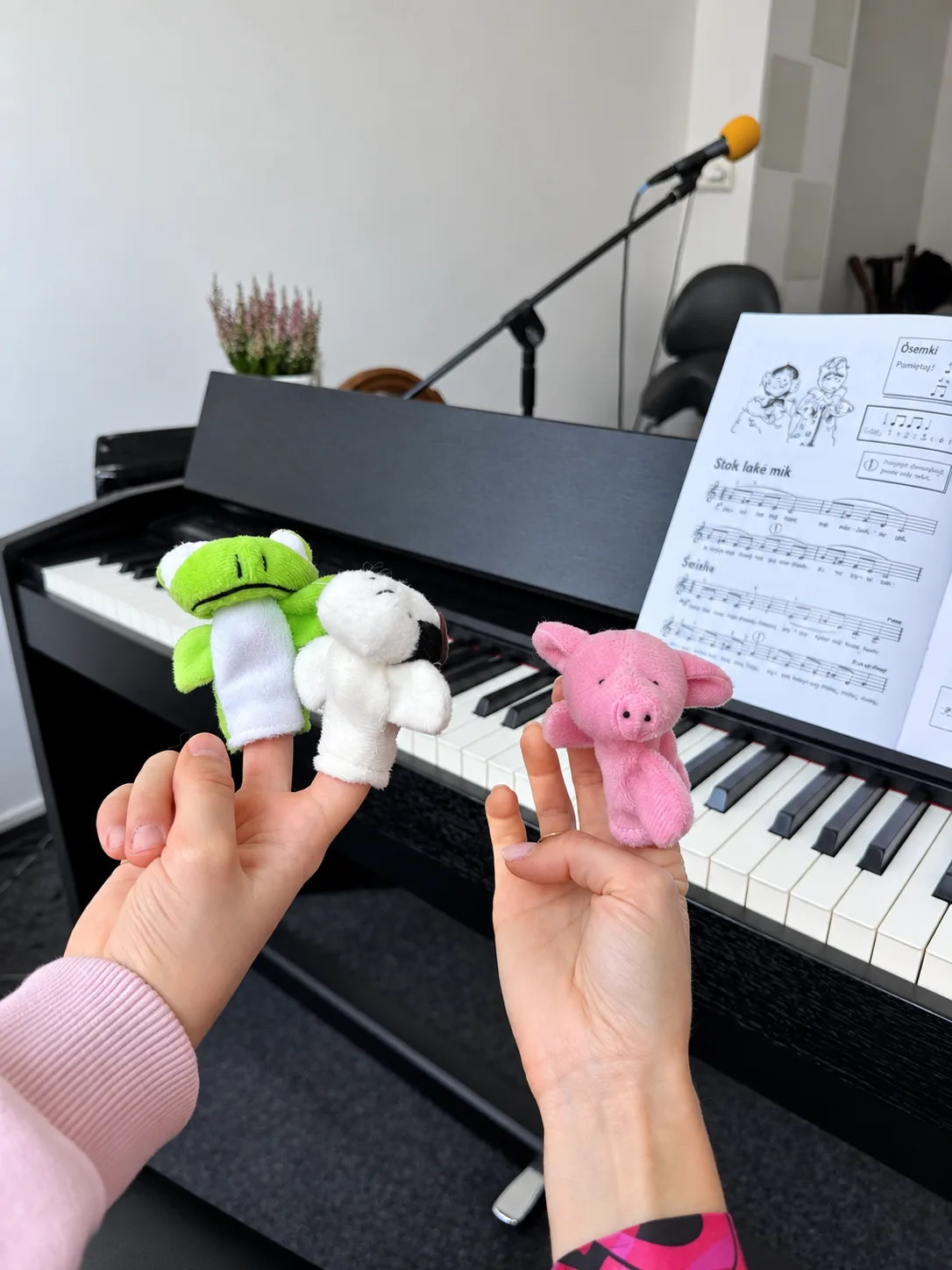
Early music education, ages 4–6
In our classes we use a variety of exercises that stimulate and develop different skills in children. These include:
- Rhythm exercises — develop motor coordination and eye–mind–movement coordination, train the child's sense of rhythm, focus and sequential memory;
- Diction exercises — develop clear speech, train the speech organs, and help the child consciously learn the difference between similar sounds;
- Breathing exercises — support emotional self-regulation and focus, and train correct breathing;
- Short songs with gestures — the child develops coordination and the ability to focus on two things at once, while also training tonal memory and sense of rhythm;
- Exercises at the piano — the child learns to recognise pitch and trains tonal memory;
- Acting exercises — stimulate creativity, build courage and self-confidence, and support intellectual and motor development.
This mix of activities means the classes develop a whole range of skills. They build a musical ear, a sense of rhythm and musicality, but also support the child's psychosocial, emotional, intellectual and motor development.
Frequently asked questions
What are early music education classes?
A form of learning for children aged 4–6 aimed at overall musical development: we play, sing, create, move to music, paint and learn music theory through play.
Book your first consultation now at 50% off!
Book a consultation